
The Gum Tree

You are probably familiar with the gum tree, of which there are several varieties. The best known belong to the family Eucalypteae and are especially numerous in Australia. More common in America is Liquidambar styraciflua, commonly known as the sweetgum.
Here at Houghton we have several examples of a different species: Bazookeana kaugummiensis, colloquially referred to as the bubblegum tree. It is relatively rare but often, for reasons not yet determined, appears on college campuses.
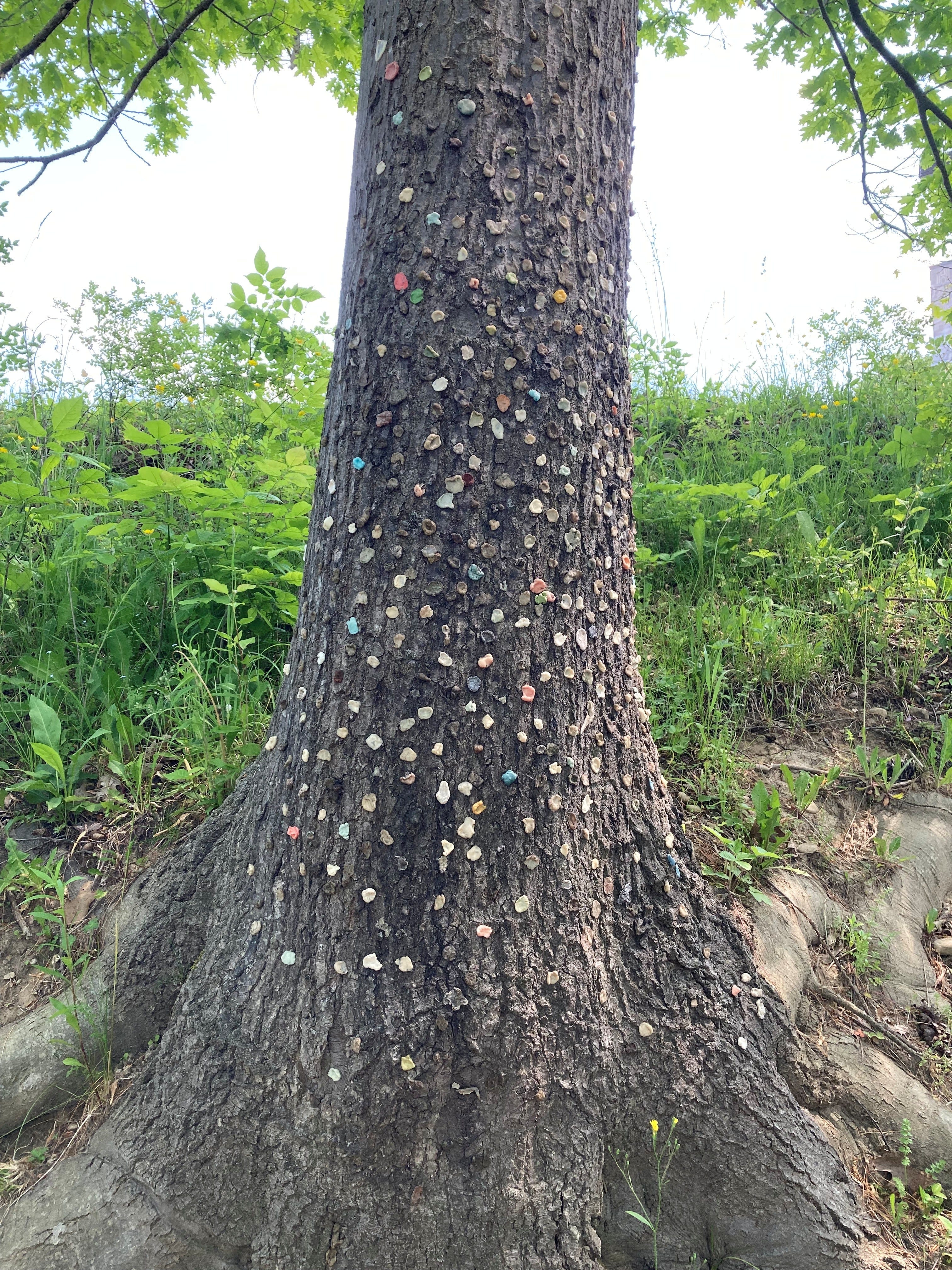
You can see a flourishing example from Houghton’s campus in the photograph at the top of this page. I photographed it myself this morning. Note in particular the tree’s highly unusual fruits, which are nicely visible in this example. The tree produces small, round, flat fruits that grow directly from its trunk in a “freckled” pattern. They have a fungus-like appearance. A single tree produces fruits in an unusually wide range of colors.
It is from these fruits, which resemble the chewing gum sometimes discovered on bedposts, that the tree derives its common moniker. They are initially ductile but harden with age. Eventually, they detach and fall to the ground, but this can take a surprisingly long time; I myself have observed fruits that survived more than two full years before finally calcifying, in spite of the harsh winters and marked seasonal changes of western New York. When a fruit does finally drop, the tree produces a new one to replace it practically overnight. At no time in the year is the tree without a significant number of its multicolored fruits.
This unusual cycle is only one of the puzzles that the “bubblegum tree” presents to botanists. In scientific circles, there is ongoing debate, which sometimes grows heated, about the tree’s genetic origins. It drops its leaves in the winter like a deciduous tree. Yet the continuous fruiting cycle, suggesting as it does that the tree never enters winter dormancy, has led certain iconoclastic scholars to suggest a link to evergreen trees.
The peculiar fruits present certain risks to both animals and humans. They have a mildly sweet flavor, attractive to many other species and said to be mildly addictive, but they are not easily digestible. They are also covered by a very thin coating of a sticky, saplike substance. This can be a hazard to insects and small birds, which are attracted by the tree’s aroma and colorful appearance but then become stuck to its trunk and find themselves unable to escape. Hummingbirds are often unfortunate victims; woodpeckers sometimes find their bills caught by an especially adhesive fruit. Even small animals can be at risk; I have seen young squirrels scurry carelessly up a bubblegum tree and find themselves stuck a few feet from the ground.
I have not been able to verify them, but archives in the county historian’s office contain newspaper clippings from the late nineteenth century claiming that a pair of careless children—a girl aged four and her two-year-old brother—once became entrapped by a bubblegum tree and starved to death before they were discovered. Fortunately, such incidents, if they ever occurred, are now vanishingly rare.
The greatest current threat to the bubblegum tree comes from young human beings, generally between the ages of five and twenty, who identify a favorite tree, approach it under cover of darkness, and rapidly devour its fruits in large numbers. The trees find it a challenge to replace so many of their fruits at once, and the strain can damage them, especially in times of drought.
It is to be hoped, however, that improved education and informational campaigns can deter such youthful depredations, helping us preserve this important element of our botanical heritage for future generations to enjoy.
😂😂